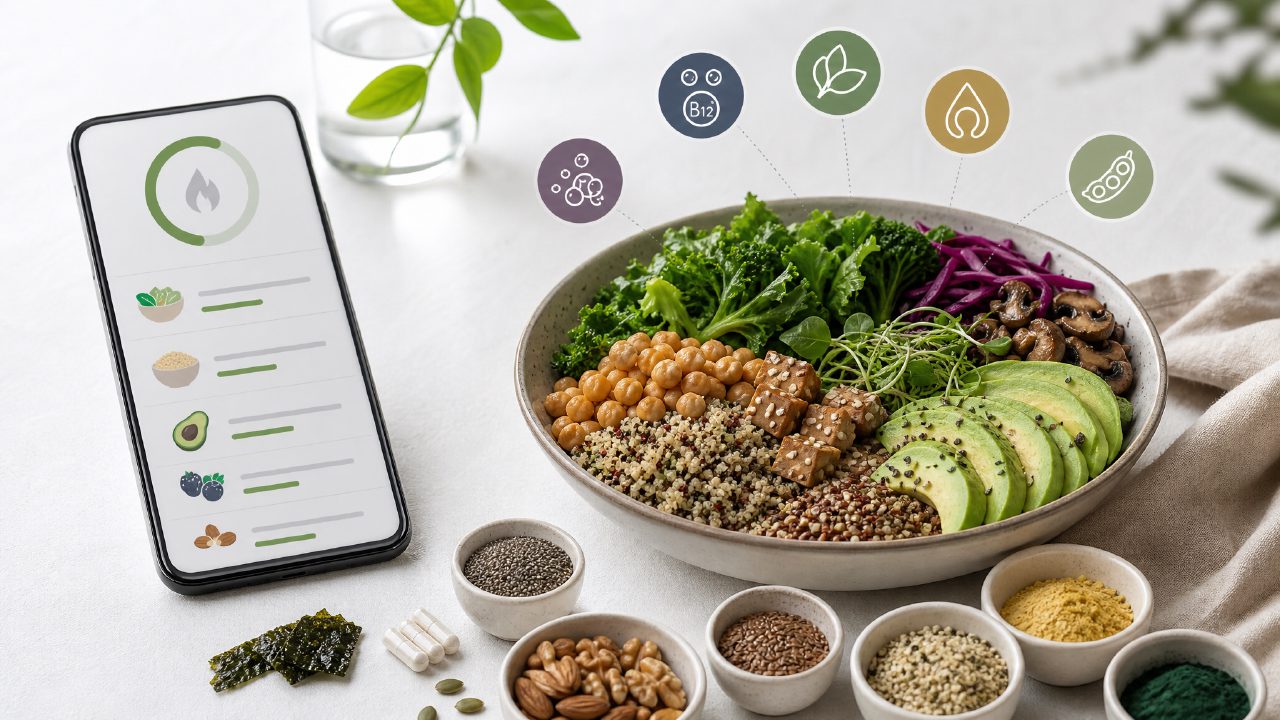
If you're eating plant-based, tracking calories isn't just about staying in a deficit — it's about making sure you're actually getting enough protein, iron, and B12. A lot of diet apps treat "vegan" as a toggle you flip once and forget. That's what made me want to try etin (the AI health tool from etinai) within the plant-based community context. But I ran into a few things that felt worth flagging, especially if you're newer to plant-based eating and thinking about using an AI-powered tracker.
The protein trap most apps don't catch
One of the first things I noticed: etin does a decent job flagging when your protein looks low for the day, but the default targets seem calibrated for a standard omnivore diet. If you're plant-based, you often need slightly higher protein per calorie because of digestibility differences. I had to manually adjust my macros in the settings — which is fine, but the app didn't nudge me to do that. If you just rely on the default, your protein "OK" status might actually be short.
Another nuance: the food database includes a lot of branded plant-based products (Beyond, Oatly, etc.), but some smaller vegan brands are missing. The AI photo recognition also struggled with dishes like lentil soup or mixed grain bowls — it guessed generic "stew" or "salad" and the calorie estimate was way off. Not a dealbreaker, but you'll want to double-check entries for anything that isn't a simple single-ingredient food.
Calorie tracking is solid, but nutrient density gets fuzzy
I tested etinai for about a week alongside a food scale and a manual log. The AI-powered calorie tracking is genuinely good for portion estimation — it was within 10-15% of my weighed portions for things like bananas, apples, and cooked rice. But with plant-based staples like tofu or legumes, the margin got wider, especially if the tofu was pressed or the beans were in a sauce.
Where the tool really shines is consistency — it's faster than typing into a generic tracker. But if you care about micronutrient tracking (iron, zinc, calcium), the free version only shows you a few metrics. The paid tier unlocks more depth, but it's not cheap. For someone deep in the plant-based community who wants detailed micronutrient reports, the free best free ai calorie tracker 2026 apps might actually have better coverage — though they lack the AI photo capture.
Meal planning: helpful but repetitive
The meal planning feature suggests combos based on your goals. I asked for high-protein vegan meals and got a lot of tofu-broccoli-quinoa repeats. Not bad, but after three days it felt narrow. The AI doesn't seem to learn your preferences fast enough — it kept suggesting chia pudding even after I swiped left each time. For a newer plant-based eater, this could be a good starting point, but seasoned cooks will want to supplement with their own recipes.
One real tradeoff: accuracy vs. convenience. If you're just trying to stay in a calorie range and don't mind some fuzziness, etin is a solid choice. But if you're meal-prepping for performance or specific macros, you'll need to weigh your food and cross-check entries. The AI is a time-saver, not a replacement for paying attention.
Who should think twice
I'd be cautious recommending this to anyone who follows a strict whole-food plant-based diet with minimal packaged goods. The food database favors branded items, so if you eat a lot of homemade lentil bowls or vegetable stir-fries, you'll spend extra time logging manually.
Also, the app's community features are light — you won't find a dedicated plant-based community space inside etinai. That surprised me given the name "plant based community" is part of the positioning. It's more of a personal tracker than a social hub. If you're looking for recipe sharing or a vegan accountability group, you'll need to pair it with something else.
Overall, etin is useful for plant-based eaters who want a quicker way to log calories and get macro reminders, but it doesn't replace basic nutrition knowledge. Keep an eye on protein targets, verify AI guesses for mixed dishes, and don't expect deep micronutrient tracking unless you pay up. It's a good tool — just not a magic wand.
Comments
Leave a Comment