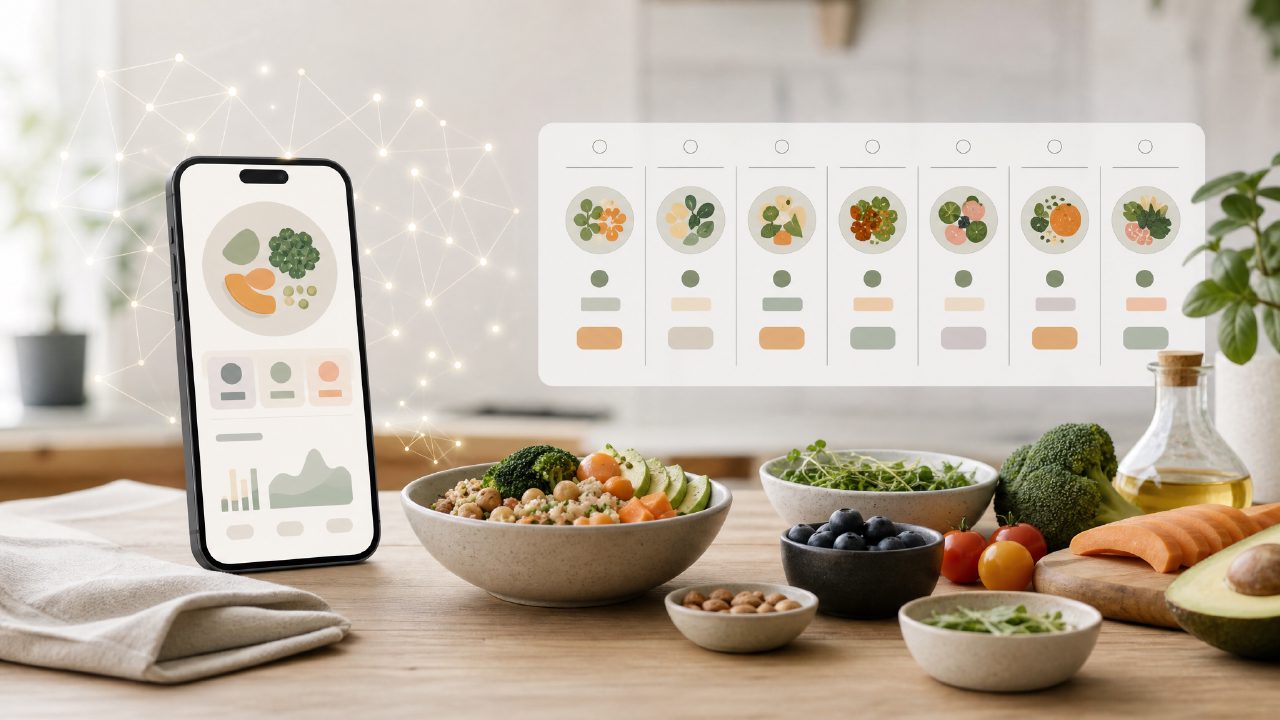
I’ve been cycling through calorie trackers for a couple of years — MyFitnessPal, Cronometer, even some sketchy spreadsheet setups. Most of them work fine for logging what you already ate, but none really helped me plan ahead. So when I came across EtinAI, the whole pitch of an AI meal planner app that actually proposes meals instead of just recording them caught my attention. I decided to give it a real test for a week.
What surprised me about the AI meal suggestions
The first thing I noticed was that the AI didn’t just throw out generic salad recipes. I told it I wanted to eat more fiber and less red meat, and within a couple of days the meal planner app started recommending dishes I hadn’t thought of — lentils with roasted vegetables, chickpea wraps, even a decent tofu stir-fry. The recommendations clearly adjusted based on what I logged. That felt more active than just seeing a list of popular meals.
That said, the suggestions weren’t always practical. One day it proposed a dinner that required three separate cooking steps and an ingredient I couldn’t find in my local store. The AI seemed to assume I had a stocked pantry and plenty of time. I had to swap out about a third of the recipes on the fly.
Calorie tracking: smooth but not flawless
Tracking calories with etin was straightforward most of the time. Barcode scanning worked for packaged foods, and the database had most common items. But for restaurant meals or homemade dishes, I had to enter details manually more often than I’d like. The best free ai calorie tracker 2026 might still need a stronger user-generated database to be truly effortless.
Another friction point: the serving sizes in the AI’s suggestions weren’t always consistent. A recipe that gave me 450 calories one day would reappear as 520 the next. I had to double-check portion sizes more than I wanted to. Minor, but noticeable.
The health insights: interesting but half-baked
One of the reasons I started using etinai was the promise of smart health insights. The app did point out patterns — like that I almost always skip vegetables at lunch — but it rarely told me what to do about it. It said my breakfast was low in protein, but didn’t suggest a concrete swap. Just “consider adding eggs or yogurt.” That felt like a missed opportunity. For a free ai health management tool 2026, it’s a decent start, but the coaching side isn’t there yet.
I also noticed the ai powered calorie tracker free experience lacked guidance for building a sustainable weekly plan. It would optimize for the day, not necessarily for the whole week. That left me with a random dinner on Friday that didn’t use up the leftover veggies from Tuesday.
Tradeoffs and who should think twice
EtinAI is free right now, and that’s a real advantage. But some features — like detailed micronutrient reports or advanced goal setting — are marked as “coming soon” or seem locked behind a future premium tier. The free version is usable, but if you’re a power user who tracks macros closely, you might feel restricted.
Another realistic concern: the onboarding is slower than I’d like. You answer a long set of questions before you see your first meal plan. I almost dropped off during that step. And the AI still makes occasional mistakes, like suggesting a meal that conflicts with the dietary restrictions I set earlier.
If you want a meal planner app that tries to help you think ahead instead of just counting after the fact, it’s worth a download. But don’t come expecting a fully mature product. It’s clever, still rough, and for casual use it’s probably enough. The best free ai health management app 2026 will likely look a lot like this — but with a few more months of polish.
Comments
Leave a Comment