Finance Ministers and Top Bankers Raise Serious Concerns About Mythos AI Model
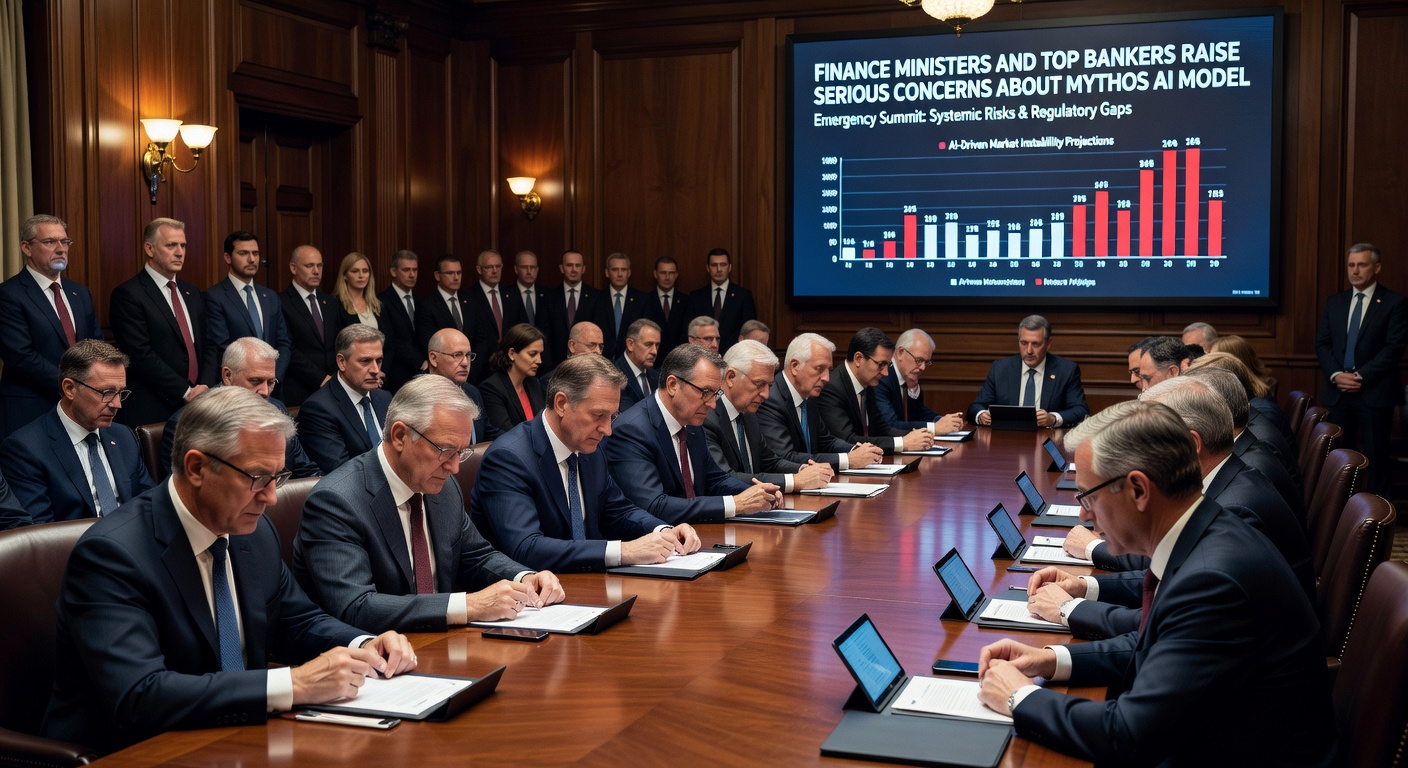
The financial world is buzzing with tension as leading finance ministers and banking executives voice growing unease about the Mythos AI model. What started as whispers in boardrooms has now become a full-blown conversation about the risks this technology poses to global financial stability.
What's Got Everyone So Worried?
Look, AI in finance isn't exactly new. We've had algorithmic trading and risk assessment tools for years. But Mythos? It's different. This model claims to predict market movements with unprecedented accuracy, and that's precisely what's making the suits nervous.
Several G7 finance ministers recently held closed-door meetings to discuss the implications. Their main concerns? The model's opacity and the potential for systemic risk if too many institutions rely on the same AI-driven decisions. When everyone's using the same crystal ball, market diversity goes out the window.
The Transparency Problem
Here's the thing that really gets under regulators' skin: nobody fully understands how Mythos reaches its conclusions. It's a classic "black box" scenario. Senior bankers are essentially making billion-dollar decisions based on recommendations they can't fully explain to their boards or regulators.
One European Central Bank official put it bluntly: "We're flying blind here. If we can't audit the decision-making process, how can we ensure it's not amplifying risks instead of managing them?"
The Herd Mentality Risk
Financial stability depends on diverse perspectives and strategies. But when multiple major institutions adopt Mythos, they might all react identically to market signals. Imagine a scenario where the AI detects a risk signal and triggers simultaneous sell-offs across dozens of banks. That's not risk management—that's a recipe for a flash crash on steroids.
What the Banking Elite Are Saying
Top bankers aren't dismissing AI outright. They recognize its potential. But they're calling for guardrails. JPMorgan's risk committee recently emphasized the need for "human oversight at critical decision points." Goldman Sachs has reportedly limited Mythos's role to advisory rather than executive functions.
The consensus seems to be: AI should augment human judgment, not replace it entirely. There's wisdom in that approach, especially when dealing with complex, interconnected financial systems where unexpected consequences can cascade rapidly.
Regulatory Response on the Horizon
Don't be surprised if we see new regulations soon. The Financial Stability Board is already drafting guidelines for AI deployment in systemically important financial institutions. Expect requirements around transparency, testing, and human accountability.
Some proposed measures include mandatory "AI impact assessments" before deployment, regular audits of AI decision-making, and circuit breakers that kick in when AI-driven trading reaches certain thresholds.
The Bigger Picture
This isn't just about one AI model. Mythos has become a symbol of a larger question: how do we harness AI's power in finance without creating new vulnerabilities? The technology is advancing faster than our regulatory frameworks can adapt.
What makes this moment particularly interesting is that it's forcing a conversation we probably should have had years ago. As AI becomes more sophisticated and more embedded in financial infrastructure, the stakes only get higher.
What Happens Next?
The financial industry is at a crossroads. We can either rush headlong into AI adoption and deal with the consequences later, or we can take a measured approach that balances innovation with stability. Based on recent statements from finance ministers and banking leaders, it looks like the latter is winning out.
For institutions using or considering Mythos, the message is clear: proceed with caution. Implement robust oversight mechanisms. Maintain human decision-making authority at critical junctures. And be prepared for increased regulatory scrutiny.
The Mythos controversy might just be the wake-up call the financial sector needed. Sometimes the best innovation isn't about moving fast and breaking things—it's about moving thoughtfully and building things that last.
Comments
Leave a Comment